
Dental Practice Management
Google Ads vs. SEO: Choosing the Right Strategy for Your Dental Practice's Growth
The evaluation process for Google Ads and SEO strategies in dental marketing will help determine which method will produce better practice growth throughout 2026.
The competitive dental marketing environment requires new patient acquisition as the essential factor which supports long-term practice expansion. Patients now perform online searches for their medical needs which include routine checkups and cosmetic procedures including teeth whitening and Invisalign and family care and dental implant treatments. The two leading digital marketing platforms which businesses use are Google Ads through pay-per-click (PPC) advertising and search engine optimization (SEO). The two systems use Google as their foundation but they operate at different speeds while having different price points and lasting effects.
The most successful modern dental practices reach their peak performance through the combination of Google Ads with SEO because these two marketing tools generate immediate patient flow through Google Ads and enduring affordable visibility through SEO. The following information presents a detailed analysis which helps you determine which dental practice model suits your business operations.
Dental Marketing with Google Ads: Instant Visibility and High-Intent Leads
Google Ads displays your practice as the first result when users search for "dentist near me" and other similar locations including "teeth whitening near me" and "Invisalign [city]."The payment system operates through click-based charges that enable users to access medical services which interest them for their requirements.
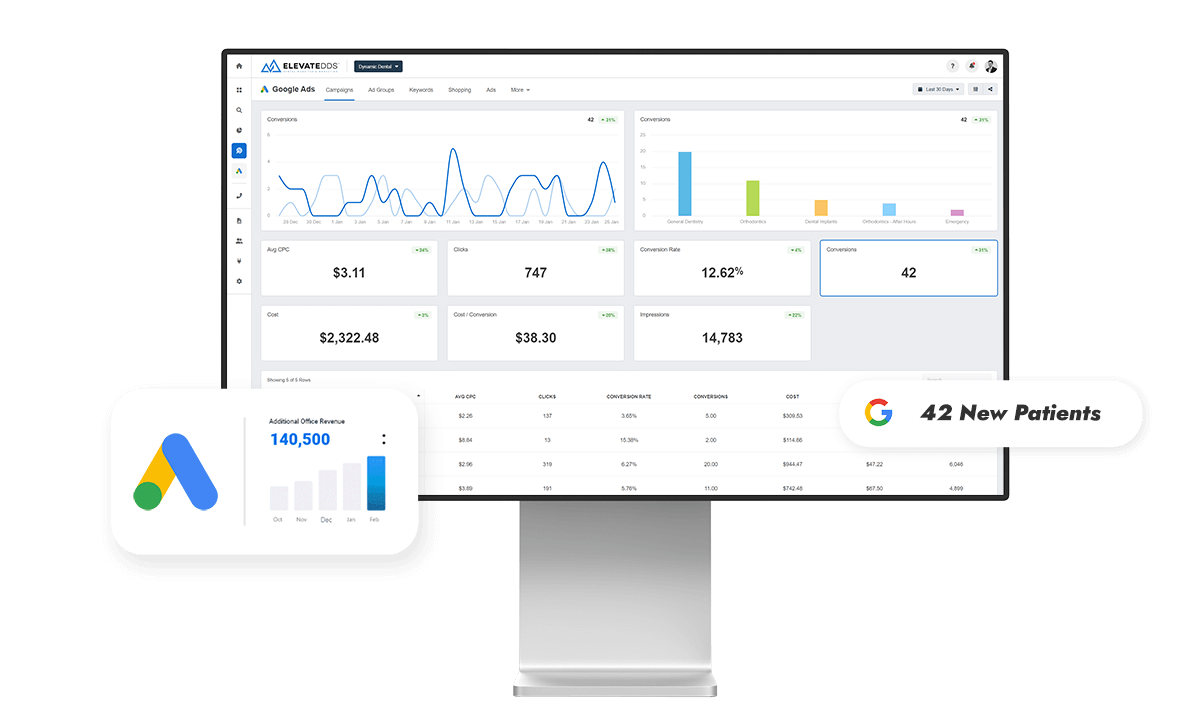
The following examples show actual Google Ads dashboard reports which track dental campaign performance through their click data and conversion rates and cost patterns.
Pros of Google Ads in Dental Marketing
The system produces instant results which enable healthcare providers to generate new patient leads during the first few days of their marketing efforts.
The system delivers exact targeting through its ability to identify locations and demographic information and device types and specific high-intent search terms which direct relevant visitors to family dentistry services and general care and high-value procedures.
The system allows users to monitor their investment returns because it tracks lead acquisition expenses between $50 and $85 and total patient acquisition costs above $150 to $325 which produce patient values between $7,000 and $10,000.
The platform enables users to evaluate promotional campaigns through various flexible testing methods which demonstrate their dental implant and veneer treatment services.
Cons
The continuous nature of expenses becomes clear when funds disappear because of traffic stops because competitive terms in 2025–2026 data show an average cost-per-click (CPC) of $7–$8.
The organization needs specific knowledge because poor leadership methods cause budgetary waste according to the organization.
The 2026 introduction of AI-based optimization systems will boost Google Ads performance for practices which focus on elective and routine medical services.
Dental Marketing through SEO: Sustainable Organic Growth and Trust Building
SEO helps websites achieve organic search rankings through optimization of their websites and their content and local search signals which include Google Business Profile. The search function gets its power from users who use search terms like "best dentist near me" and "family dentist [city]" and similar search terms.
The graphs show that dental website rankings together with traffic numbers keep increasing because of continuous SEO efforts.

Pros of SEO in Dental Marketing
The system operates with free ongoing traffic which supports its user base because users can get their first rankings without needing to spend any additional advertising costs.
Organic search results appear more genuine than advertisements which users must pay to display.
The long-term financial advantages of compounding benefits make paid marketing channels less necessary.
The AI-era provides two main benefits to users who have strong content and demonstrate E-E-A-T (Experience, Expertise, Authoritativeness, Trustworthiness) which Google uses to generate AI summaries.
Cons
The process of obtaining competitive terms through this method requires a long period of time which spans from six months to eighteen months or more.
The system requires continuous operation because it needs both algorithm updates and competition adjustments which need constant maintenance.
The 2026 SEO trends will concentrate on delivering high-quality content through Generative Engine Optimization (GEO) and local signal optimization and AI-compatible structured data formats.
Dental Marketing Decision: Google Ads, SEO, or Both?
Choose based on your goals:
The platform Google Ads offers your best solution to attract immediate patient traffic because it lets you reach users who are actively searching for dental services at that exact moment.
The practice needs to build SEO as its core foundation because this will create lasting stability which enables the practice to establish medical expertise and draw new patients who discover the practice through family and general medical care search results.
The recommended method requires using Ads to generate immediate revenue which will fund SEO expenses while PPC performance data enables the selection of SEO keywords. The combination of paid advertising with organic search results enhances both user trust and overall click-through rates.
The Foundation of Dental Marketing Success: Your Website
A website serves as the foundation for all marketing strategies because it enables website visitors to become new patients through its conversion capabilities which support both online and offline marketing efforts.
The following examples demonstrate how modern dental homepages implement direct booking buttons to develop interfaces which focus on patient needs.

Essential Website Elements
The website needs to provide users with a positive experience through its fast page loading time which should not exceed three seconds and its mobile-friendly design and easy-to-use interface and visible "Book Now" buttons.
The following list includes the essential technical SEO elements which include HTTPS encryption and schema markup and proper speed and indexing optimization.
The website contains the following content elements which include procedure pages about teeth whitening and Invisalign treatment and blog sections and patient FAQs and personal stories.
The system contains three fundamental conversion tools which let users access online scheduling features and fill out forms and obtain customer feedback through testimonials.
A patient-friendly site lowers bounce rates, improves rankings, and boosts ad conversions.
Final Thoughts on Dental Marketing in 2026
Google Ads and SEO operate as separate entities which work together to achieve better results. Through SEO users can access fast and precise answers to their daily and beauty-related questions through ads.
Assess your practice: Test Google Ads with a controlled budget (e.g., 90-day trial) if leads are slow. The organization needs to dedicate budget for learning basic SEO principles because these skills will become essential for future business operations. A dental marketing strategy which achieves its highest success rate needs to implement two methods which include creating a well-designed website to create instant patient traffic and sustained market dominance.
Your practice will achieve success through strategic planning which you should begin immediately to achieve a successful 2026.
